
Visit Our Website | Explore More Blogs

In the fast-paced world of IoT gateways and modules, choosing the right connectivity technology is crucial. Among the top contenders, Wi-Fi and LoRaWAN stand out as popular choices for enabling smart devices, industrial automation, and large-scale IoT deployments. But which one is better for your business?
This article provides a detailed IoT connectivity comparison, highlighting the strengths and limitations of Wi-Fi for IoT and LoRaWAN for IoT, so you can make an informed decision.
Understanding Wi-Fi for IoT
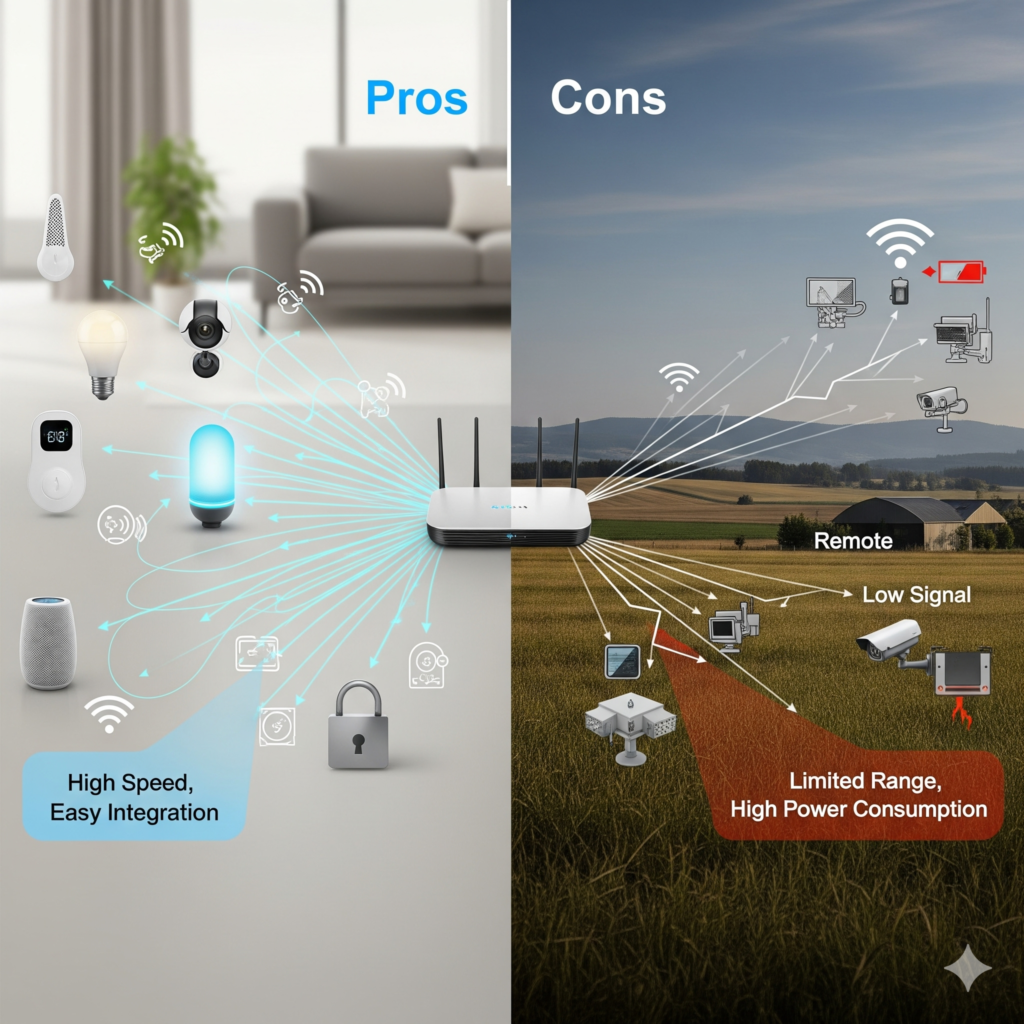
Wi-Fi for IoT is widely used because of its:
- High speed: Supports real-time data transfer.
- Familiarity: Works with existing infrastructure.
- Ease of deployment: Simple integration with IoT devices.
However, Wi-Fi comes with drawbacks:
- Limited range (usually up to 100m indoors).
- Higher power consumption — not ideal for battery-powered IoT modules.
- Can struggle with scalability when connecting thousands of IoT devices.
Wi-Fi is best for smart homes, offices, and industrial IoT gateways where high bandwidth is required.
Understanding LoRaWAN for IoT
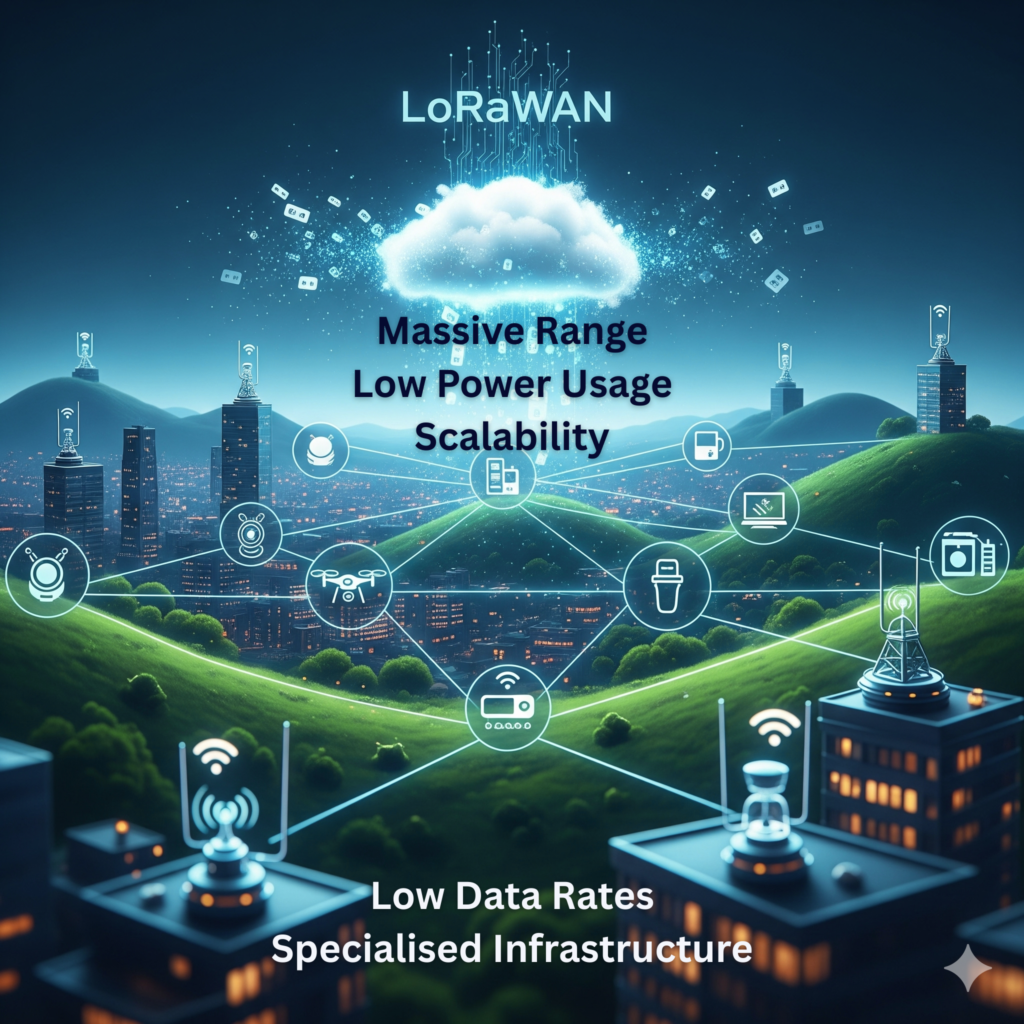
LoRaWAN technology is designed specifically for low-power, long-range IoT communication. Its features include:
- Massive range: Up to 15 km in rural areas.
- Low power usage: Perfect for battery-powered IoT modules.
- Scalability: Can handle thousands of devices per gateway.
But LoRaWAN also has limitations:
- Lower data rates compared to Wi-Fi.
- Requires specialized gateways and infrastructure.
LoRaWAN is ideal for smart cities, agriculture, supply chain monitoring, and industrial IoT deployments where long range and low power are more important than speed.
Wi-Fi vs LoRaWAN: A Side-by-Side Comparison
| Feature | Wi-Fi for IoT | LoRaWAN for IoT |
|---|---|---|
| Speed | High bandwidth | Low bandwidth |
| Range | Short (up to 100m) | Long (up to 15 km) |
| Power Usage | High | Very Low |
| Scalability | Moderate | Excellent |
| Best Use Cases | Smart homes, offices, video-based IoT | Smart cities, agriculture, logistics |
Which IoT Connectivity Solution is Best?
Choosing between Wi-Fi and LoRaWAN depends on your specific IoT project:
- If your IoT gateway requires real-time data, high throughput, and short distances, Wi-Fi is the better choice.
- If your IoT modules are remote, battery-powered, and need long-range communication, LoRaWAN offers the best solution.
Many businesses use a hybrid approach, leveraging both Wi-Fi and LoRaWAN technologies to cover different IoT use cases effectively.
FAQs
Q1: Is Wi-Fi or LoRaWAN more cost-effective for IoT?
LoRaWAN often reduces costs for large-scale deployments due to its scalability and low energy use.
Q2: Can Wi-Fi and LoRaWAN work together in IoT gateways?
Yes, modern IoT gateways and modules support multi-protocol designs, combining Wi-Fi, BLE, and LoRaWAN.
Q3: Which is better for industrial IoT?
LoRaWAN works better for remote monitoring, while Wi-Fi suits industrial automation requiring high data rates.
Conclusion
The debate of Wi-Fi vs LoRaWAN in IoT connectivity isn’t about one being universally better. Instead, it’s about selecting the best IoT connectivity solution that matches your use case, environment, and scalability needs.
At LINK⇌LOGiX, we specialize in IoT gateways and modules supporting Wi-Fi, BLE, and LoRaWAN technologies — enabling businesses to build future-ready, scalable IoT solutions.
👉 Learn more on our website.
👉 Read more insights on our blog page.